
Path 01 · Home Safety Assessments
Home safety assessments
A home safety assessment is a clinical audit of the home against the care plan, performed under CAPS (Certified Aging-in-Place Specialist) and SHSS (Senior Home Safety Specialist) method. It answers one question with evidence: what would it take for your loved one to be safe here?
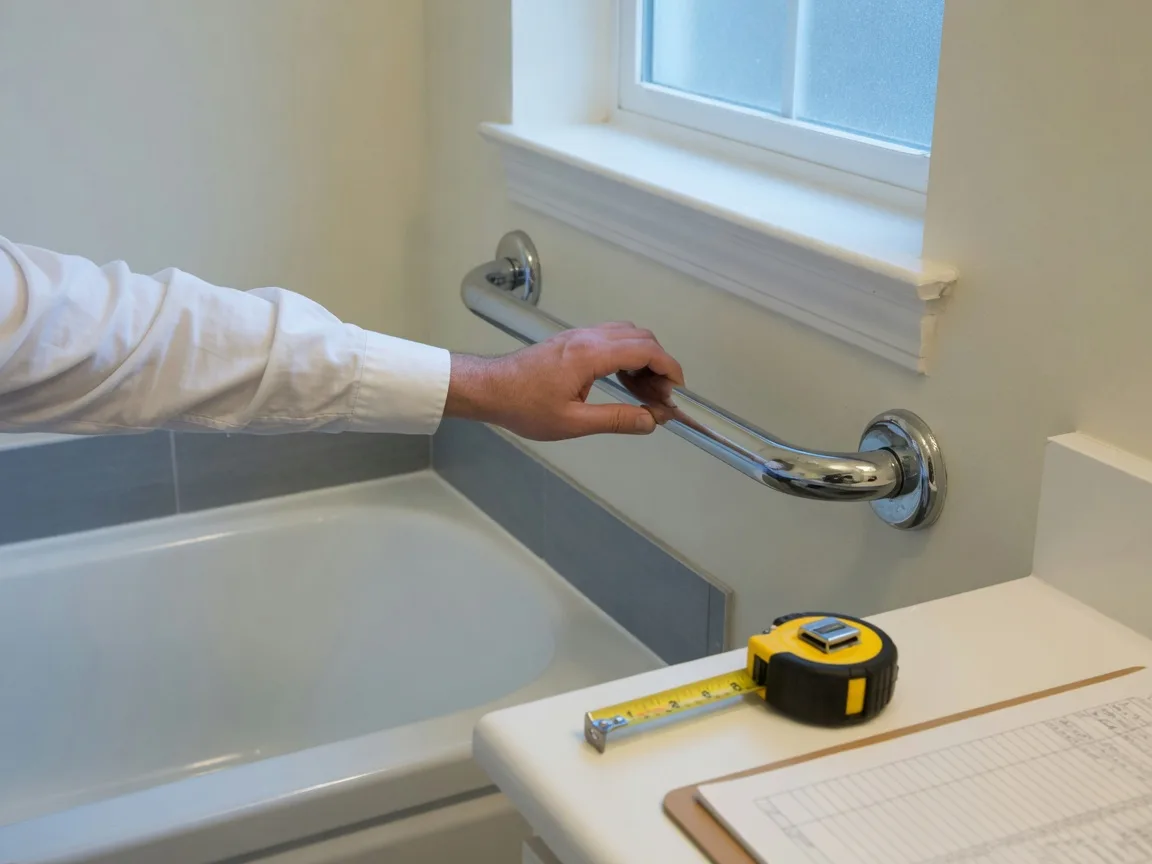
What the Assessment Covers
Every room and every risk, written down
Falls risk
Trip hazards, uneven surfaces, rugs, cords, and the paths your loved one actually walks, including the path to the bathroom at night.
Bathroom safety
The highest-risk room in the home: tub and shower entry, toilet transfer, grab bar placement, and non-slip surfaces.
Stairs & thresholds
Stair condition, railings, step height, and the thresholds between rooms and at the entrances.
Lighting
Coverage at night, switch access, and the dark zones where falls most often happen.
Medication safety
Storage, organization, and the routines that keep medication management safe and simple.
Emergency access
Can help reach your loved one quickly in an emergency? Locks, alarms, and the plan for a fall that cannot be avoided.
How It Works
The assessment comes to you
The assessment is performed in the home, at the hospital, or at the current residence, anywhere in Maryland, Virginia, and Washington DC. Families never travel to the assessment; the assessment travels to them.
- 1
The walkthrough
A credentialed assessor walks the home room by room, with the care plan in hand.
- 2
The written report
Every risk is documented with a priority: fix now, fix soon, or monitor.
- 3
The plan
Repairs and modifications are priced and scheduled, and the family decides what to do.
Why It Matters
Most families cannot see their own home the way a credentialed assessor does. The bathroom that has worked for thirty years, the rug that has always been there, the light switch that has never moved: these are the details a professional assessment catches, and the details that decide whether staying home is safe.
The assessment also gives the family something to hold: a written document that supports the Stay vs. Move decision, that can be shared with a physician, a discharge planner, or an elder law attorney, and that records what was done and why.
Schedule a home safety assessment
Start with the needs assessment, or talk to us and we will arrange the walkthrough.