
The Process · What to Expect
The process: it begins with a conversation
We begin by meeting with your loved one and your family, taking time to understand the full situation before recommending anything. This page describes what that looks like, so you know what to expect before the first conversation.
What to Expect · The Conversation
We listen first
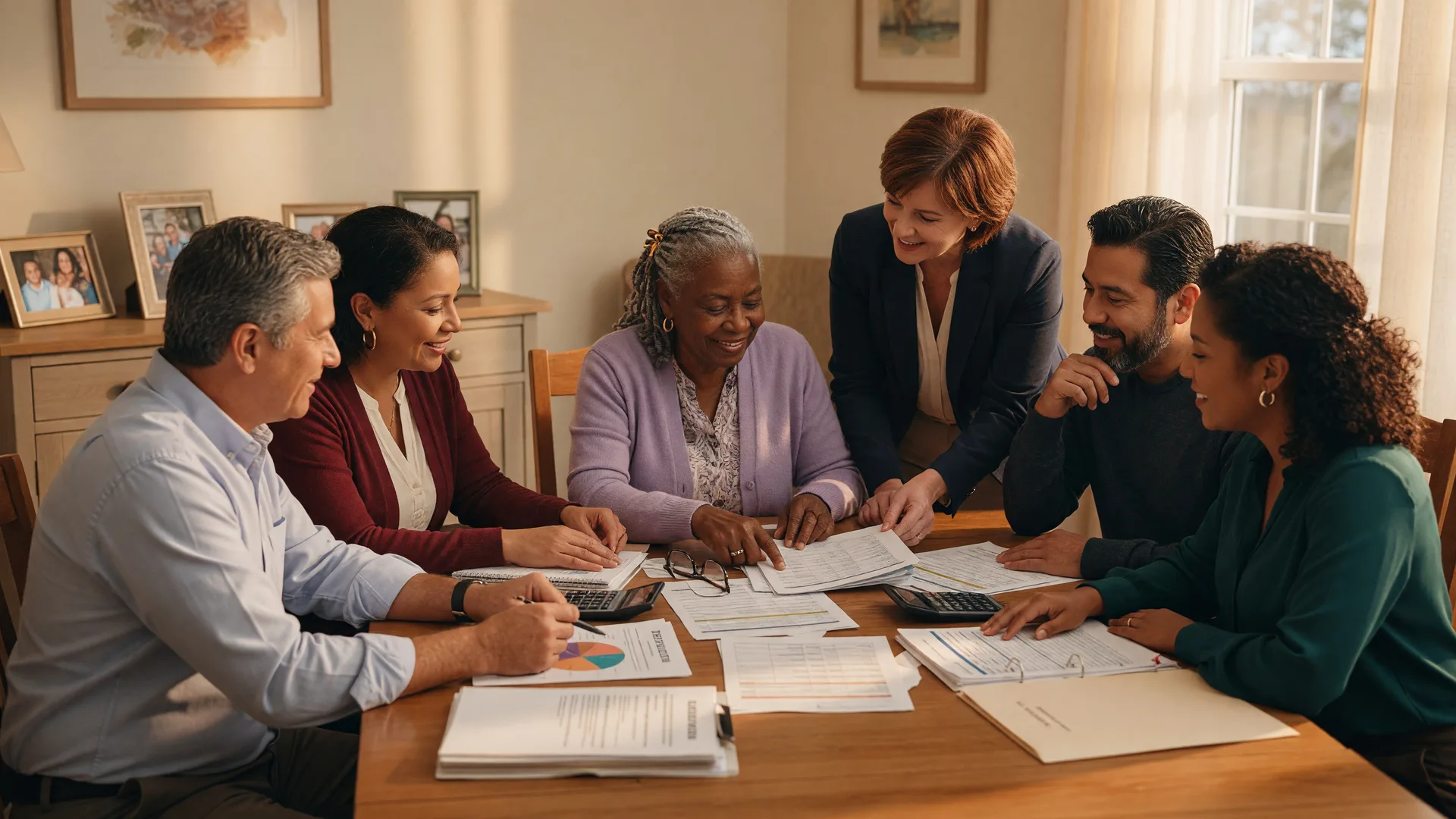
The first meeting is a conversation, not a form. We meet with your loved one and your family, wherever you are most comfortable, and we review the whole picture: health, home, finances, and, most importantly, what everyone actually wants. There is no paperwork pushed across the table and no decision demanded by the end of the hour.
You can expect to be heard. Family members who have been carrying the worry get to set it down for an hour, and your loved one gets to speak for themselves, in their own words, at their own pace. After we listen, we go through each pathway with you, discuss the options plainly, and only then does any plan begin.
What to Expect · Discovery
We look at every option thoroughly and honestly
After the conversation comes discovery: a careful look at every option, each one on its own. No option is bundled into a package, and none is dismissed without a fair review.
Staying home
What would it take to stay safely? The home safety assessment answers it with evidence.
A community
Assisted living, independent living, or memory care, screened against the assessed needs, free to the family.
Selling the home
The sale plan, the preparation, the downsizing, and the move, planned and documented.
Care at home
The right level of in-home support, from companion services to skilled nursing through Liberty Advanced Nursing.
The needs assessment is the structured version of this discovery: a short quiz that frames the situation, care needs, home safety, timing, and assets in no more than 5 minutes. The answers go straight to Senior Home Solutions.
What to Expect · The Chosen Path
You choose one path together, and we carry it out with you
Discovery ends with a recommendation, made with the family, not to the family. The path that fits is explained plainly: what it involves, what it costs, who does what, and what happens first.
Then the work begins: the assessment scheduled, the care plan created, the community toured, the home modified or listed, the move coordinated. The family is kept informed at every milestone, and the plan adjusts as needs change.
- One honest recommendation. One path that fits, not a menu of options.
- One accountable coordinator. Clinical care, licensed home work, and estate real estate under one roof.
- Kept informed. The family hears about the care and any adjustments needed, at every step.
Before the First Meeting
You do not need to prepare anything. If it helps, bring a list of what worries you most, and any documents you already have: a diagnosis, a discharge summary, a list of medications, a recent tax or mortgage statement. But none of it is required.
- A list of the family's questions and worries
- Any discharge or medical summaries, if available
- A rough sense of timing: weeks, months, or planning ahead
- Nothing else. The conversation covers the rest.
The Four Paths
The paths on the table
Home Safety & Aging in Place
Home assessments, senior-focused repairs, fall prevention, and accessibility modifications.
ExploreSenior Living Placement
Assisted living, independent living, memory care, and transition assistance.
ExploreSenior Real Estate & Home Sales
Home sale planning, property preparation, downsizing, and relocation coordination.
ExploreHome Care & Nursing Solutions
Assistance identifying appropriate in-home support, from companion services to skilled nursing.
ExploreNot sure where to start? Take the quiz.
The needs assessment takes no more than 5 minutes and frames the whole situation for us.